
October 2025

Discoveries, trends, and discussions in medical diagnostics
1) Beyond BRCA: Guideline-based genetic testing
2) Streamline respiratory testing
3) Updated ACG guidelines for H pylori testing
4) Explore HSV testing options
5) Get actionable cardiometabolic insights
6) Listen to the hepatitis and HIV podcast
7) See what’s next in testing for novel psychoactive substances

|
Better outcomes |
Better outcomes |
Beyond BRCA: Guideline-based genetic testing


- Breast cancer diagnosed < 50 years of age
- Triple negative breast cancer
- Two primary breast cancers (including bilateral)
- Male breast, ovarian, pancreatic, or prostate cancer
- Multiple family members or generations affected
- Guidelines3-6 recommend genetic testing for multiple genes associated with hereditary breast cancer risk to avoid missing actionable genetic risk factors
- The Quest Diagnostics Hereditary Breast Cancer Panel checks for variants in the BRCA1 and BRCA2 genes, along with 16 other genes (18 total) linked to inherited breast cancer risk
- For individuals with a complex family history of cancer beyond breast cancer, a larger gene panel may be more appropriate



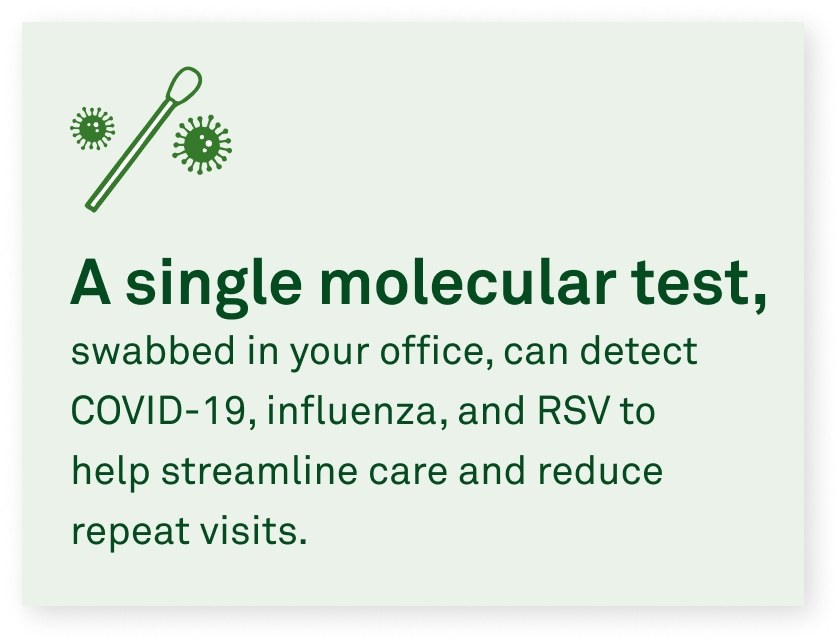
Streamline respiratory testing



Updated ACG guidelines for H pylori testing





|
Better experiences |
Better experiences |
Explore HSV testing options
- Over 50% of US adults have oral herpes (cold sores), mostly from HSV-1
- About 12% of people ages 14-49 have genital HSV-2 infection; up to 90% of those infected don’t realize it



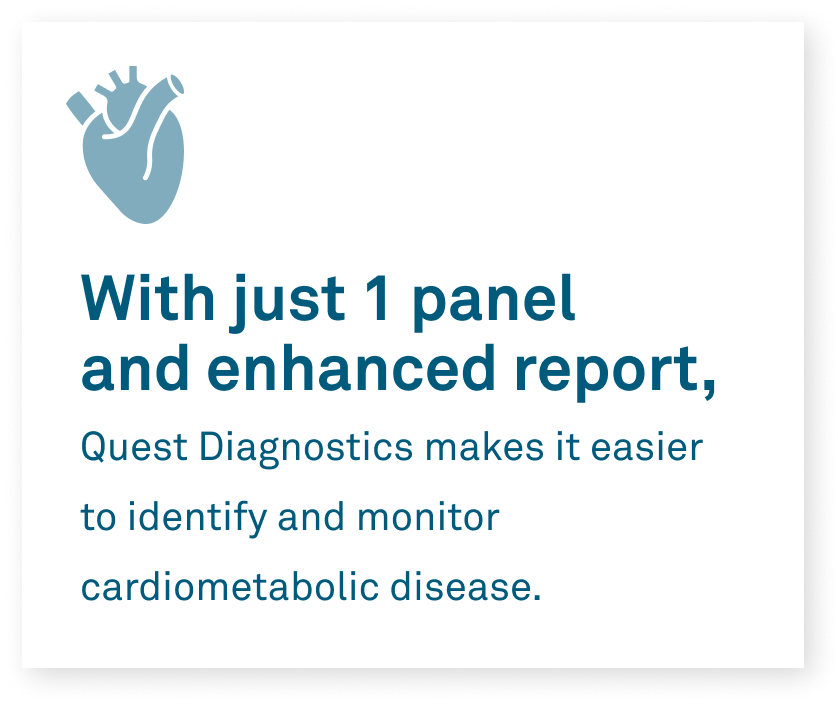
Get actionable cardiometabolic insights



|
Removing traditional barriers to testing |
|
|
Removing traditional barriers to testing |
Removing traditional barriers to testing |
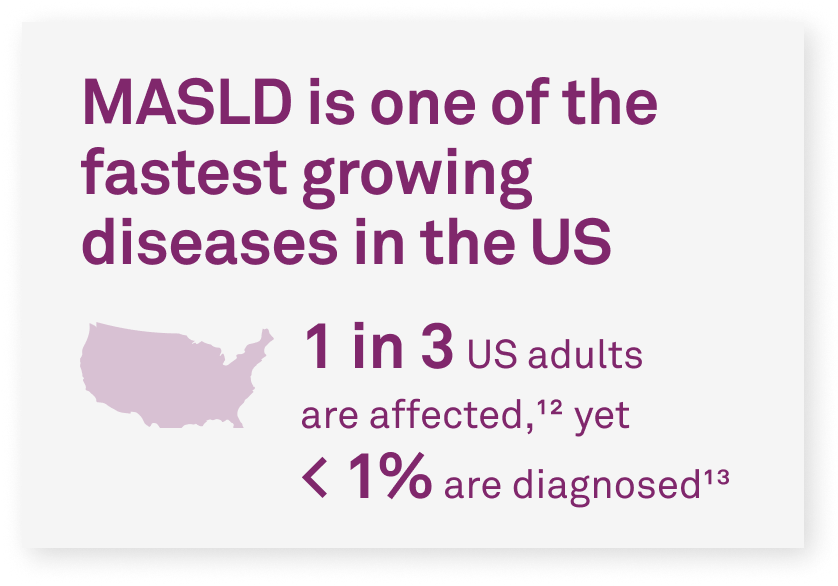
Listen to the hepatitis and HIV screening podcast



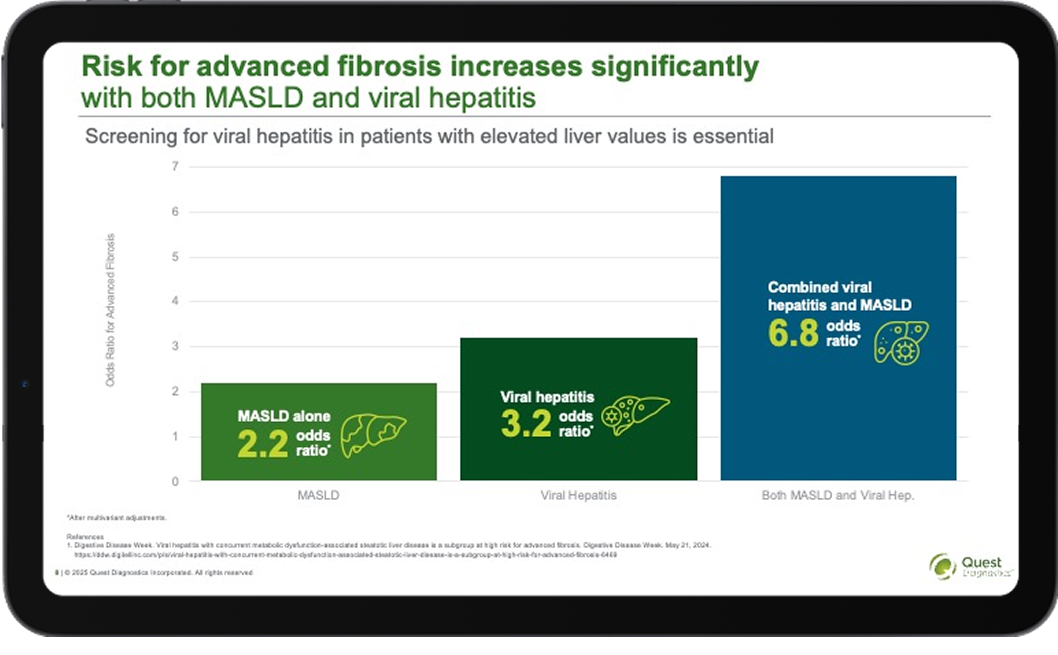
- How coinfections accelerate disease progression
- What’s new in screening panels and reporting from Quest
- Ways Quest is making guideline-based screening easier for providers and patients



|
See what’s next in testing for novel psychoactive substances |
|
|
See what’s next in testing for novel psychoactive substances |
|
|
See what’s next in testing for novel psychoactive substances |
See what’s next in testing for novel psychoactive substances |
Quest Diagnostics will launch an enhanced novel psychoactive substances (NPS) Gen III panel later this year as part of our commitment to addressing the evolving challenges of illicit substances and prescription drug misuse. |
Stay tuned for more details on the Q4 release and how this update will help clinicians stay ahead of an ever-shifting drug landscape.
 |
As a reminder, you can listen to our podcast for insights into the evolving drug landscape. |
Achieving the Quadruple Aim in your practice


About Diagnostics Dialogue
- Breastcancer.org. Breast cancer facts and statistics. Accessed September 18, 2025. https://www.breastcancer.org/facts-statistics
- CDC. What causes hereditary breast and ovarian cancers. August 28, 2024. Accessed September 24, 2025. https://www.cdc.gov/breast-ovarian-cancer-hereditary/causes/index.html
- National Comprehensive Cancer Network. NCCN clinical practice guidelines inoncology (NCCN Guidelines®): Genetic/Familial High-Risk Assessment: Breast, Ovarian, Pancreatic, and Prostate. Version 1.2026. July 10, 2025. Accessed September 25, 2025. https://www.nccn.org/guidelines/guidelines-detail?category=2&id=1545
- Ricker C, Arun B, Pirzadeh-Miller S, et al. Selection of germline genetic testing panels in patients with cancer: ASCO guideline clinical insights. JCO Oncol Pract. 2024;20(12):1308-1313. doi.org/10.1200/OP.24.00278
- American College of Obstetricians and Gynecologists. Hereditary cancer syndromes and risk assessment. ACOG Committee Opinion No. 793. Obstet Gynecol. 2019;134(6):e143-e149. Accessed September 25, 2025. https://www.acog.org/clinical/clinical-guidance/committee-opinion/articles/2019/12/hereditary-cancer-syndromes-and-risk-assessment
- American College of Obstetricians and Gynecologists. Cascade testing: testing women for known hereditary genetic mutations associated with cancer. ACOG Committee Opinion No. 727. Obstet Gynecol. 2018;131(1):e31-e34. https://www.acog.org/clinical/clinical-guidance/committee-opinion/articles/2018/01/cascade-testing-testing-women-for-known-hereditary-genetic-mutations-associated-with-cancer
- Chey WD, Howden CW, Moss SF, et al. American College of Gastroenterology. ACG clinical guideline: treatment of Helicobacter pylori infection. Am J Gastroenterol. 2024;119(9):1730-1753. doi:10.14309/ajg.0000000000002968
- Aldhaleei W, Wallace M, Harris D, et al. Helicobacter pylori: a concise review of the latest treatments against an old foe. Cleve Clin J Med. 2024:91(8):481-487. doi:10.3949/ccjm.91a.24031
- American Sexual Health Association. Herpes: fast facts. Updated July 31, 2025. Accessed September 18, 2025. https://www.ashasexualhealth.org/herpes/
- Raghupathi W, Raghupathi V. An empirical study of chronic diseases in the United States: a visual analytics approach. Int J Environ Res Public Health. 2018;15(3):431. doi:10.3390/ijerph15030431
- CDC. Current epidemic trends (based on Rt) for states. Updated August 5, 2025. Accessed August 9, 2025. https://www.cdc.gov/cfa-modeling-and-forecasting/rt-estimates/index.html
- Harrison SA, Gawrieh S, Roberts K, et al. Prospective evaluation of the prevalence of non-alcoholic fatty liver disease and steatohepatitis in a large middle-aged US cohort. J Hepatol. 2021;75(2):284-291. doi:10.1016/j.jhep.2021.02.034
- Kaiser Permanente. Many adults may be unaware that they have liver disease. January 31, 2025. Accessed September 18, 2025. https://divisionofresearch.kaiserpermanente.org/unaware-masld-liver-disease/
- Digestive Disease Week. Viral hepatitis with concurrent metabolic dysfunction-associated steatotic liver disease is a subgroup at high risk for advanced fibrosis. May 21, 2024. Accessed September 18, 2025. https://ddw.digitellinc.com/p/s/viral-hepatitis-with-concurrent-metabolic-dysfunction-associated-steatotic-liver-disease-is-a-subgroup-at-high-risk-for-advanced-fibrosis-6469
- Kim HY, Yoon JW, An JY, et al. Prevalence of clinically significant liver fibrosis in the general population. Clin Mol Hepatol. 2024;30(Suppl):S205-S216. doi:10.3350/cmh.2024.0351
- Connors EE, Panagiotakopoulos L, Hofmeister MG, et al. Screening and testing for hepatitis B virus infection: CDC recommendations—United States, 2023. MMWR Recomm Rep. 2023;72(RR 1):1–25. Accessed June 26, 2025. https://www.cdc.gov/mmwr/volumes/72/rr/rr7201a1.htm
- CDC. Clinical screening and diagnosis for hepatitis C. January 31, 2025. Accessed June 26, 2025. https://www.cdc.gov/hepatitis-c/hcp/diagnosis-testing/index.html
- CDC. Getting tested for HIV. CDC.gov. February 11, 2025. Accessed June 26, 2025. https://www.cdc.gov/hiv/testing/index.html