
September 2025

Discoveries, trends, and discussions in medical diagnostics

Let's connect

Fill out the form below to have a Quest representative contact you.

Please remember that email, including this web form, is not a secure method of communication. Do not submit personal information, including usernames and passwords, social security numbers, or personal health information through this form.

*Required

Better outcomes


Better outcomes


Guidelines suggest screening for primary aldosteronism for a broader population

Primary aldosteronism (PA) is a condition that can lead to serious health complications if patients aren’t screened.
PA is missed or misdiagnosed 95% of the time1
Untreated PA significantly increases the risk for heart failure, kidney disease, stroke, atrial fibrillation, and metabolic disorders.2,3 High-risk groups include patients with resistant hypertension, unexplained hypokalemia, adrenal masses, sleep apnea, atrial fibrillation, or a strong family history of hypertension.
Early detection matters
Updated guidelines from the Endocrine Society suggest that all patients with hypertension be screened for PA.4 
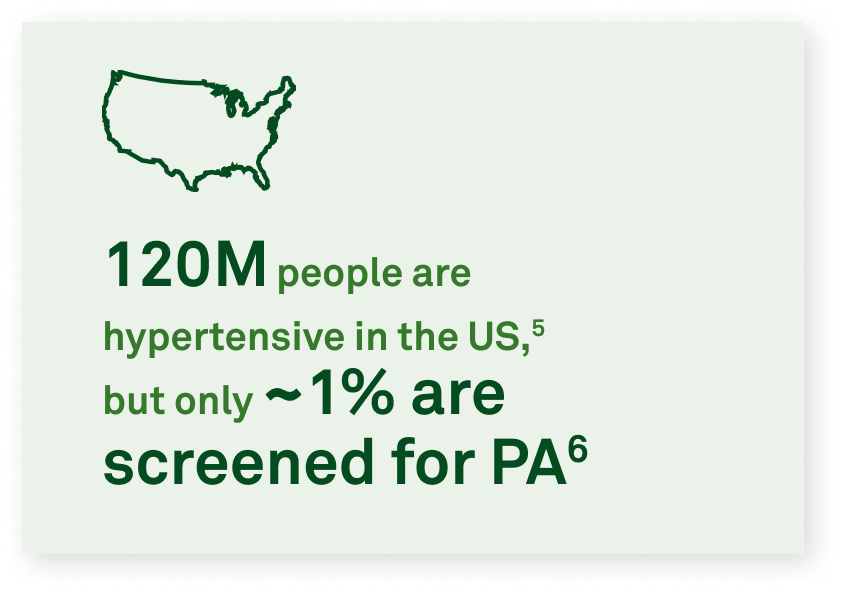
120M people are hypertensive in the US,5 but only ~1% are screened for PA6
Quest offers guideline-aligned testing, including Plasma Renin Activity (PRA) with Reflex to Aldosterone, which requires only 1 blood draw.
Read the Provider Insights article to learn more about the updated recommendations and download our resource for test details and screening guidance.

Know more sooner with respiratory molecular combination testing

While COVID-19 surveillance is no longer at pre-pandemic levels, recent CDC modeling shows infections are likely increasing in 45 states, with none showing a decline.7
This uptick comes just ahead of the fall and winter influenza and RSV season—when patients may present with overlapping symptoms such as fever, cough, and shortness of breath.

For at-risk individuals or those with acute illness, timely diagnosis is essential to initiate treatment when it can be most effective. Testing for COVID-19, influenza, and RSV at the same time helps avoid delays and supports accurate, efficient patient management.
Quest offers a comprehensive portfolio of molecular combination testing to help you identify the cause sooner—so you can act faster and develop the most appropriate care plan.

Spotlight on PCOS, ovarian cancer, and prostate cancer

September brings awareness to polycystic ovary syndrome (PCOS), ovarian cancer, and prostate cancer. Each carries unique challenges in detection and diagnosis, but early recognition can improve patient outcomes.

Demystifying PCOS diagnosis
PCOS is the most common endocrine-metabolic disorder in reproductive-age women and a leading cause of female infertility,8 affecting up to 5M women in the US.9 Diagnosis can be complex and is made by excluding other conditions with similar presentations.

The diagnostic journey is often prolonged.

  • More than 1 in 3 women with PCOS see at least 3 healthcare providers across 2 or more years before diagnosis10
  • Up to 70% of affected women remain undiagnosed worldwide11
A structured, step-by-step method—supported by our broad laboratory testing—can help confirm PCOS and identify its underlying cause, leading to more timely and targeted treatment.

Recognizing the subtle signs of ovarian cancer
Ovarian cancer is the second most common gynecologic cancer in the US, but it causes more deaths than any other female reproductive cancer—often due to late-stage diagnosis.12 Symptoms are frequently vague, including bloating, pelvic or abdominal pain, and early satiety, which can delay investigation.

Risk assessment and careful evaluation of symptoms is essential for high-risk patients—such as those with certain gene mutations. Genetic counseling and testing can guide prevention and early detection strategies.

Our Guideline Based Hereditary Cancer Panel includes 32 genes associated with a broad spectrum of hereditary cancers, including ovarian cancer.

Discussing prostate cancer risk is important
Prostate cancer affects about 1 in 8 men during their lifetime, with risk increasing with age.13

The American Cancer Society recommends patient–provider discussions about screening options based on age and risk factors.13
  • Age 50 for men at average risk of prostate cancer who are expected to live at least 10 more years
  • Age 45 for men at high risk of prostate cancer, including all Black men and any man with a father or brother diagnosed with prostate cancer before age 65
  • Age 40 for men at even higher risk, including any men with more than one brother or both a father and brother who had prostate cancer, and men who carry any BRCA gene mutations

Improving accuracy with IsoPSA®
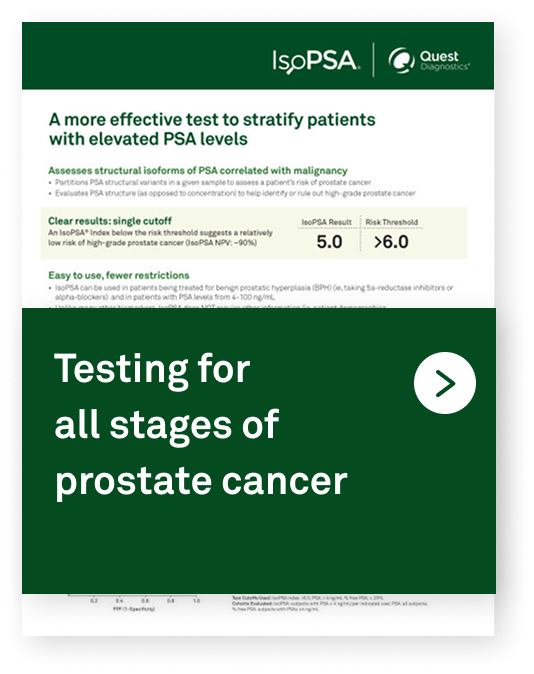
Traditional prostate-specific antigen (PSA) testing measures concentration alone, which can lead to unnecessary biopsies. IsoPSA® takes a different approach—evaluating structural isoforms of PSA to more accurately distinguish high-grade prostate cancer from low-grade disease or benign conditions.

Accurate: A blood test that more accurately detects high‑grade prostate cancer14

Simple: A straightforward test that’s easy to order. No DRE required. No additional patient information needed. Not affected by BPH medications14,15

Proven: An extensive portfolio of published studies in collaboration with leading academic and research institutions and inclusion in guidelines for early prostate cancer detection16

Quest offers IsoPSA alongside a full portfolio of tests supporting prostate cancer screening, diagnosis, and management.

Better experiences


Better experiences


Add clarity to allergy diagnoses and care with component testing

Whole allergen testing identifies sensitization, but component testing goes deeper—pinpointing the specific proteins involved in an allergic response. This protein-level insight can help distinguish primary sensitization from cross-reactivity, assess the likelihood of systemic versus localized reactions, and guide dietary, therapeutic, and emergency planning.
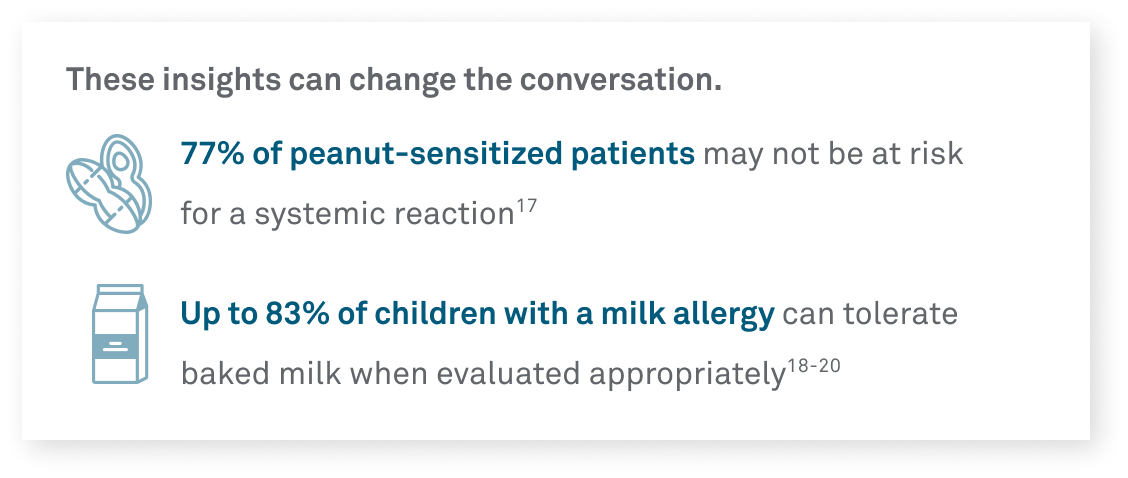
These insights can change the conversation. 77% of peanut-sensitized patients may not be at risk for a systemic reaction17 Up to 83% of children with a milk allergy can tolerate baked milk when evaluated appropriately18-20
Quest offers ImmunoCAP® IgE testing for both whole allergens and individual components, with reflex testing that adds component analysis automatically when whole allergen results are positive—requiring only one blood draw. Discover more about our testing solutions at QuestAllergyTesting.com

Unlock blood cancer insights

September is Blood Cancer Awareness Month
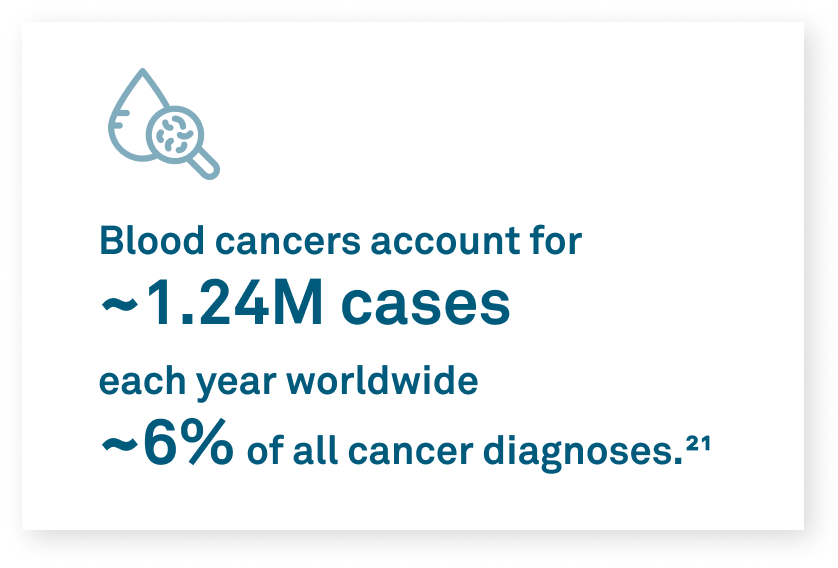
Blood cancers account for ~1.24M cases each year worldwide ~6% of all cancer diagnoses.21
In addition to acute and chronic leukemias, lymphomas, and multiple myeloma, other hematologic malignancies such as myelodysplastic syndromes (MDS) and myeloproliferative neoplasms (MPN) can have substantial impact on blood cell production and function.
Guideline-driven hematology testing with complete workups from a single sample
Quest Diagnostics provides hematology cancer testing services across the continuum of care—from initial evaluation to advanced molecular characterization. Our algorithms support diagnostic workups for hematologic malignancies and benign hematologic disorders, including MPNs, MDS, plasma cell neoplasms, coagulopathies, and hemoglobinopathies. One patient sample supports the entire diagnostic process from start to finish.
Our portfolio aligns with NCCN®, WHO, ACMG, AMP, and IMWG guidelines.
Key offerings include:

MPN Diagnostic Cascading Reflex—analyzes genetic mutations for a more accurate MPN workup

LeukoVantage®—next-generation sequencing (NGS) panel designed to aid in the diagnosis, prognosis, and treatment planning for patients with MDS

Explore our hematology testing solutions for guideline-based, clinically actionable results.

Removing traditional barriers to testing 


Removing traditional barriers to testing 


Removing traditional barriers to testing 


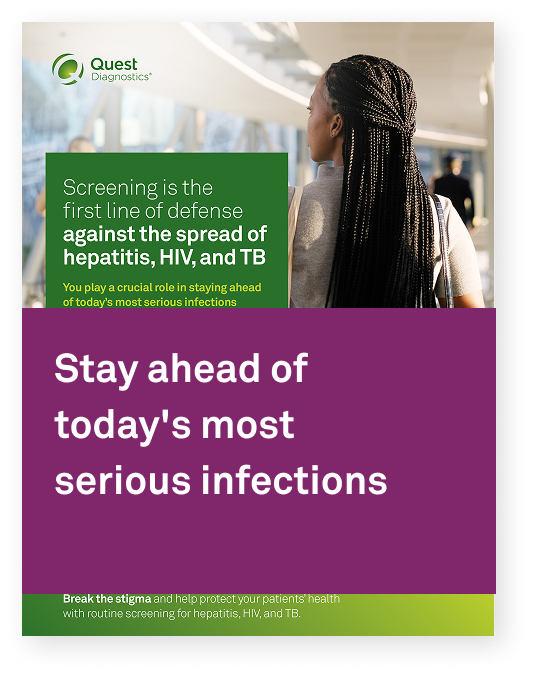
Earlier detection of hepatitis can lead to earlier intervention

CDC guidelines recommend universal screening for hepatitis B (HBV), hepatitis C (HCV), and HIV for all adults22-24—because earlier detection can lead to earlier intervention.
Coinfections are common
  • 1 in 4 people with HIV also have HCV25
  • Up to 2.4M people are chronically infected with HBV26
  • Over 93K new cases of chronic HCV were diagnosed during 202227
  • 1.2M people are living with HIV28
Visit QuestIDScreening.com to see how we can help make universal screening part of every patient’s care

Emerging psychoactive substances demand updated testing

Novel psychoactive substances (NPS)—including designer benzodiazepines, fentanyl analogs, and synthetic cannabinoids—are increasingly complicating overdose detection and treatment.  These agents often evade traditional toxicology screens, leaving providers without a full picture of what’s affecting their patients.

In a recent episode of the podcast The Results Are In, Dr Jack Kain, Director, Medical Science Liaison, and JasonSuomala, Product Director for Quest Drug Monitoring and Toxicology, explain how the updated NPS testing panel from Quest helps fill that gap.

Through real-world cases and clinical insights, they illustrate how broader screening unveils hidden threats—empowering you to identify and manage NPS-related intoxications with greater confidence.

Listen to the episode to stay ahead of the evolving drug landscape—and inform safer, more informed clinical decisions. You'll hear about

Emerging threats: NPS continue to surface in counterfeit pills and illicit drug mixes, heightening overdose risks

Testing limitations: Conventional toxicology often misses NPS, delaying proper diagnosis and care

Improved detection: The Quest enhanced NPS panel supports comprehensive screening and more accurate patient assessment

Prioritize sexual health screening


Prioritize sexual health screening


Prioritize sexual health screening


Prioritize sexual health screening 


National Sexual Health Awareness Month each September is a valuable opportunity to assess patient sexual health, identify risk factors, and address concerns before they become serious.

Because sexual health conversations can be uncomfortable, some conditions may go undiagnosed—contributing to the ongoing burden of sexually transmitted infections (STIs).

STIs by the numbers (2023)28

  • 2.4M+ cases of chlamydia, gonorrhea, and syphilis reported in the US
  • 1.8% overall decline from 2022 to 2023
  • 10% drop in primary and secondary syphilis—the first notable decrease in more than 20 years

While these trends show progress, STI rates remain a pressing public health concern.

Sexual health is essential to overall health and well-being, and Quest offers a comprehensive screening portfolio to help ensure timely diagnosis and treatment for your patients.

Achieving the Quadruple Aim in your practice

Our purpose is to support you and your patients with leading services, patient experiences, and innovative testing that can help you provide clarity to the constant changes and challenges we’re seeing in healthcare today.

About Diagnostics Dialogue

In our conversations with providers across the country, we hear that you are facing many different constraints that make delivering care challenging. We’re here to help you navigate the uncertainty and deliver better health. With a broad test menu spanning 3,500+ tests and consultations from our medical staff of over 850 MDs and PhDs, we empower healthcare providers to create healthier communities, one patient at a time.

References
  1. Farah MH, Hegazi M, Firwana M, et al. A systematic review supporting the Endocrine Society Clinical Practice Guideline on management of primary aldosteronism. J Clin Endocrinol Metab. 2025;110(9):e2833-e2844. doi:10.1210/clinem/dgaf290
  2. Cleveland Clinic. Primary aldosteronism (Conn’s syndrome). Up dated July 22, 2024. Accessed September 3, 2024. https://my.clevelandclinic.org/health/diseases/21061-conns-syndrome
  3. Hung A, Ahmed S, Gupta A, et al. Performance of the aldosterone to renin ratio as a screening test for primary aldosteronism. J Clin Endocrinol Metab. 2021;106(8):2423-2435. doi:10.1210/clinem/dgab348
  4. Endocrine Society. Endocrine Society guideline calls for increased screening for common cause of high blood pressure. July 14, 2025. Accessed August 17, 2025. https://www.endocrine.org/news-and-advocacy/news-room/2025/endocrine-society-guideline-calls-for-increased-screening-for-common-cause-of-high-blood-pressure
  5. CDC. High blood pressure facts. January 28, 2025. Accessed August 17, 2025. https://www.cdc.gov/high-blood-pressure/data-research/facts-stats/index.html
  6. Sivarajah M, Beninato T, Fahey TJ III. Adherence to consensus guidelines for screening of primary aldosteronism in an urban healthcare system. Surgery. 2020;167(1):211-215. doi:10.1016/j.surg.2019.05.087
  7. CDC. Estimated COVID-19 reproduction number (Rt) by state and territory. Updated August 5, 2025. Accessed August 9, 2025. https://www.cdc.gov/cfa-modeling-and-forecasting/rt-estimates/index.html
  8. Azziz R. Polycystic ovary syndrome. Obstet Gynecol. 2018;132(2):321-336. doi:10.1097/AOG.0000000000002698
  9. CDC. Diabetes and polycystic ovary syndrome (PCOS). May 15, 2024. Accessed March 29, 2023. https://www.cdc.gov/diabetes/risk-factors/pcos-polycystic-ovary-syndrome.html
  10. Escobar-Morreale HF. Polycystic ovary syndrome: definition, etiology, diagnosis and treatment. Nat Rev Endocrinol. 2018;14(5):270-284. doi:10.1038/nrendo.2018.24
  11. WHO. Polycystic ovary syndrome. June 28, 2023. Accessed July 22, 2024. https://www.who.int/news-room/fact-sheets/detail/polycystic-ovary-syndrome
  12. CDC. Ovarian cancer statistics. June 10, 2025. https://www.cdc.gov/ovarian-cancer/statistics/index.html
  13. American Cancer Society. Cancer facts for men. Updated May 5, 2025. Accessed October 9, 2024. https://www.cancer.org/cancer/risk-prevention/understanding-cancer-risk/cancer-facts/cancer-facts-for-men.html
  14. Klein EA, Partin A, Lotan Y, et al. Clinical validation of IsoPSA, a single-parameter, structure-focused assay for improved detection of prostate cancer: a prospective, multicenter study. Urol Oncol. 2022;40(9):408.e9-408.e18. doi:10.1016/j.urolonc.2022.06.002
  15. Benidir T, Lone Z, Wood A, et al. Using IsoPSA with Prostate Imaging Reporting and Data System score may help refine biopsy decision making in patients with elevated PSA. Urology. 2023;176:115-120. doi:10.1016/j.urology.2023.03.014
  16. IsoPSA. Clinical evidence: publications. IsoPSA. Accessed September 7, 2025. https://www.isopsa.com/clinical-evidence/publications/
  17. Nicolaou N, Poorafshar M, Murray C, et al. Allergy or tolerance in children sensitized to peanut: prevalence and differentiation using component-resolved diagnostics. J Allergy Clin Immunol. 2010;125(1):191-197. doi:10.1016/j.jaci.2009.10.008
  18. Dramburg S, Hilger C, Santos AF, et al. EAACI Molecular Allergology User’s Guide 2.0. Pediatr Allergy Immunol. 2023;34 Suppl 28:e13854. doi:10.1111/pai.13854
  19. De Boer R, Cartledge N, Lazenby S, et al. Specific IgE as the best predictor of the outcome of challenges to baked milk and baked egg. J Allergy Clin Immunol Pract. 2020;8(4):1459-1461.e5. doi:10.1016/j.jaip.2019.10.039
  20. Leonard SA. Baked milk- and egg-containing diet in the management of milk and egg allergy. J Allergy Clin Immunol Pract: 2015;3(1):24. doi: 10.1016/j.jaip.2014.10.007
  21. Shapira S, Kazanov D, Mdah F, et al. Feasibly of CD24/CD11b as a screening test for hematological malignancies. J Pers Med. 2021;11(8):724. doi:10.3390/jpm11080724
  22. Connors EE, Panagiotakopoulos L, Hofmeister MG, et al. Screening and testing for hepatitis B virus infection. MMWR Recomm Rep. 2023;72(RR 1):1-25. Accessed June 26, 2025. https://www.cdc.gov/mmwr/volumes/72/rr/rr7201a1.htm
  23. CDC. Clinical screening and diagnosis for hepatitis C. January 31, 2025. Accessed June 26, 2025. https://www.cdc.gov/hepatitis-c/hcp/diagnosis-testing/index.html
  24. CDC. Getting tested for HIV. CDC.gov. February 11, 2025. Accessed June 26, 2025. https://www.cdc.gov/hiv/testing/index.html
  25. Maier I, Wu GY. Hepatitis C and HIV co-infection: a review. World J Gastroenterol. 2002;8(4):577-579. doi:10.3748/wjg.v8.i4.577
  26. Connors EE, Panagiotakopoulos L, Hofmeister MG, et al. Screening and testing for hepatitisB virus infection. MMWR Recomm Rep. 2023;72(RR 1):1-25. Accessed June 26, 2025. https://www.cdc.gov/mmwr/volumes/72/rr/rr7201a1.htm
  27. CDC. 2022 Hepatitis C surveillance report. Updated April 3, 2024. Accessed June 25, 2024. https://www.cdc.gov/hepatitis/statistics/2022surveillance/hepatitis-c.html
  28. CDC. CDC publishes new HIV surveillance reports. May 21, 2024. Accessed August 18, 2025. https://www.cdc.gov/nchhstp/director-letters/cdc-publishes-new-hiv-surveillance-reports.html
Image content features models and is intended for illustrative purposes only.